

TRAVEL & TOURISM
From Site Selection magazine, November 2007

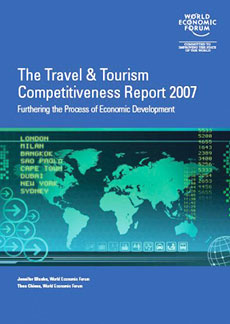
Index Gauges T&T Sector's Prospects
A
ny industry that accounts for a tenth of the world's GDP and 8 percent of its work force will necessarily have a substantial economic impact in the locations where it has a presence. That is the scale of the travel and tourism industry, according to the World Travel & Tourism Council. But which locations will help that industry succeed? The World Economic Forum's new Travel & Tourism Competitiveness Index (TTCI) may have the answer. Released in March, the index measures the factors and policies that make it attractive to develop the travel and tourism sector in countries worldwide.
"Our study is not a 'beauty contest' or a statement about the attractiveness of a country," noted Jennifer Blanke, senior economist of the World Economic Forum's Global Competitiveness Network, at the introduction of the index. "On the contrary, we aim to measure the factors that make it attractive to develop the travel and tourism industry of individual countries."
The TTCI draws on publicly available data sources, international travel and tourism institutions and experts and results from the World Economic Forum's Executive Opinion Survey in cooperation with the Forum's Partner Institutes in the 124 countries covered in the index. Thirteen "pillars" of travel
"Although industrialized states clearly dominate, poorer countries have a massive potential to be the leading force in international tourism."
and tourism form the basis of the TTCI. They are:
— Geoffrey Lipman, United Nations World Tourism Organization
• Policy rules and regulations
• Environmental regulation
• Safety and security
• Health and hygiene
• Prioritization of travel and tourism
• Air transport infrastructure
• Ground transport infrastructure
• Tourism infrastructure
• Information and communication technology infrastructure
• Price competitiveness
• Human capital
• National tourism perception
• Natural and cultural resources
"Showing the full economic impact of the [travel and tourism] sector in the index will enhance its relevance for policymakers,"
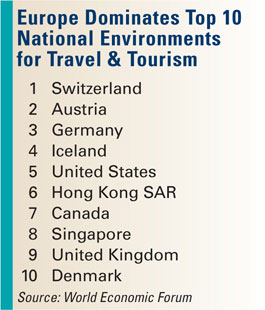
Adds Thea Chiesa, head of aviation, travel and tourism at the World Economic Forum: "TCCI is designed for any executive looking to grow in global markets, with a specific focus on emerging markets. Learning from this report will allow industry to effectively and efficiently engage governments in creating blueprints for sustainable and viable travel and tourism industry development."
Put another way, the value of the index is in countries' application of the analysis as they seek a larger share of travel- and tourism-related capital investment.
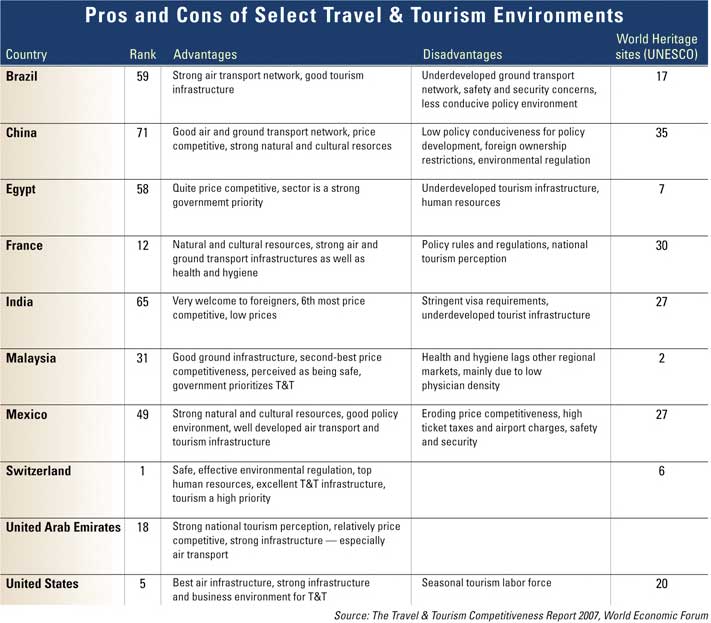
One measure of a country's natural and cultural resources is the number of World Heritage sites on a list maintained by the United Nations Educational, Scientific and Cultural Organization (whc.unesco.org/en/list). The table on page 850 shows certain countries' overall rank, travel and tourism pluses, minuses and number of World Heritage sites. For more on the WEF's index, visit www.weforum.org/tourism.
Move Over, Las Vegas

Enjoy this original content? Bookmark it to share with your friends!
Site Selection Online – The magazine of Corporate Real Estate Strategy and Area Economic Development.
©2007 Conway Data, Inc. All rights reserved. SiteNet data is from many sources and not warranted to be accurate or current.
©2007 Conway Data, Inc. All rights reserved. SiteNet data is from many sources and not warranted to be accurate or current.