

TRANSPORTATION EQUIPMENT
From Site Selection magazine, March 2009
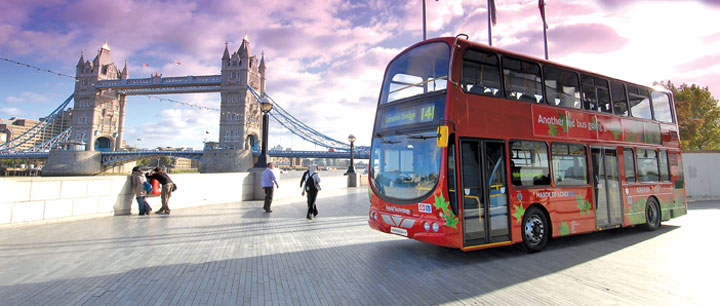
Taking steps to lose its nickname of "The Big Smoke," London is embracing the use of hybrid buses. Transport for London, the city's transit agency, will only add hybrids to its bus fleet after 2012. London currently has 56 double- and single-deck hybrid buses in service. Plans call for 300 more to join the city's fleet by March 2011.
Image courtesy of Transport for London
GREEN TRANSIT
U
.S. mass transit is slowly but surely heading to hybrid buses. A study conducted by the American Public Transportation Association in 2008 indicated an estimated 2,500 U.S. transit buses were of the hybrid variety. That figure is rising as cities across the nation, helped by federal grant money, are adding hybrids to their fleets at a rapid clip. For example, New York City, which introduced hybrid buses in 1998, had nearly 900 by the end of 2008.
"There is fuel economy improvement ranging from 20 to 40 percent in miles per gallon, depending on the routes you put them on," says Kevin Walkowicz, senior project leader with the National Renewable Energy Lab's transportation technologies group in Golden, Colo. "Stop-and-go traffic is perfect for the electric drive system."
Many of the world's major bus builders have hybrid bus programs. New technology has spawned several new entrants into the field, with two planning new U.S. manufacturing operations.
Light Vehicle Could Have Heavy Job Impact
Fisher Coachworks of Troy, Mich., formed in 2007, traces its history to Fisher Body, which formed in 1908 and later became part of GM. The company manufactures advanced hybrids using a patented ultra-lightweight stainless steel unibody structural system and low-cost fabrication process.
Fisher has licensed the technology for the bus from Rochester, Mich., firm Autokinetics, and has built a prototype which it uses to demonstrate the technology. Oak Ridge National Lab in Tennessee participated in the development of the project, which received its initial US$2.5 million in funding from the U.S. Dept. of Energy.
Fisher moved into a temporary pilot manufacturing facility in the Detroit suburb of Oak Park on Feb. 2. The company hopes to be well into the Federal Transportation Administration certification process for its buses by the end of 2009 and expects to be scaling up for commercial production starting in 2010. The State of Michigan approved an $11.3-million Michigan Economic Growth Authority (MEGA) tax credit for the project, based on job creation.
"Our engineering and pilot build center won't be our long-term home," says John VanAlstyne, vice president, marketing, for Fisher Coachworks. "We will be looking for a larger facility to fill out our manufacturing footprint."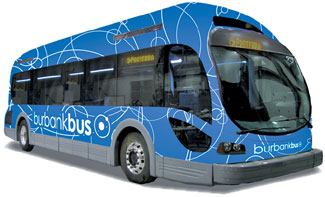
The company initially announced it would begin its manufacturing operations in Livonia, another Detroit suburb. VanAlstyne says Fisher decided it needed an interim step before full-scale manufacturing. He says the larger manufacturing facility will be located at a site to be determined in the Detroit area, most likely an existing facility.
"Our plans call for rapidly growing this business," VanAlstyne says. "Our expectations are that over a seven-year period, we will be in excess of 500 employees. The state has calculated that indirect employment could be up to 1,900 jobs."
VanAlstyne says Fisher Coachworks will scale its manufacturing as it grows its business.
"We will have a flexible manufacturing line that will allow us to grow. Our goal is to create a lot of jobs."
VanAlstyne says the Fisher Coachworks bus, with a body made of lightweight Nitronic stainless steel made by AK Steel, is only half as heavy as current transit buses. Weight reduction, coupled with the hybrid propulsion system, allows the bus to achieve more than twice the fuel economy of current hybrid buses and three times that of diesel-powered buses.
"Current diesel buses get 3 to 3.5 miles per gallon, current hybrids get 4 to 4.5 mpg, and our bus will achieve in excess of 10 mpg," VanAlstyne says. "That's equivalent mpg because we will use some electricity. Our buses will also have some benefits in terms of maintenance, due to their unique design. It's a complete clean sheet of paper approach to a transit bus."
VanAlstyne expects the switch to hybrids to accelerate across North America and beyond.
"We've been engaging with public transit authorities," he says, "and for the most part there is intent to convert to hybrids in a big way – that trend is already in progress."
Although Fisher Coachworks had not had any major orders as of early February, VanAlstyne says there is plenty of interest among potential customers.
Fisher also considered Chattanooga, which aggressively recruited the project, VanAlstyne says, and offered a bus testing facility nearby. In the end, the appeal of staying in Michigan, enhanced by the state's incentives, won out.
"The State of Michigan stepped up in a big way to help us out," VanAlstyne says. "Michigan has the skilled labor force with the technical know-how that we need. There were a lot of positive factors that drove us to prefer Michigan."
From Golden to the Golden State
Another new type of hybrid bus is being developed by Proterra, a Golden, Colo.-based firm that specializes in hybrid-electric and plug-in hybrid buses for transit agencies and school systems. The company currently does small-scale manufacturing in Golden, but is considering locating a manufacturing facility in San Jose, Calif., pending a potential order with that city or the state of California.
"Our team has a fair amount of experience in manufacturing whether in rail or bus or even other consumer electronics," says Joshua Goldman, Proterra's director of business development.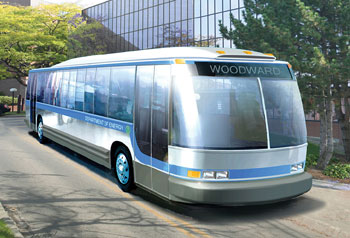
Goldman says the manufacturing facility would occupy approximately 100,000 sq. ft. (9,290 sq. m.). He says Proterra hopes to have a decision on the site by the end of 2009. Long-range plans call for setting up similar facilities on the East Coast, he says. Plants will be located near potential markets.
Proterra, which was formed in 2004, currently employs 50. Full-scale manufacturing will increase that to 200, and Goldman projects that the company could employ 1,000 within five years with additional manufacturing facilities.
"We won't have a typical assembly line," Goldman says. "It will be very much a hand-built assembly of components. So it lends itself to very rapid up-scaling of manufacturing facilities, typically at a lower cost.
"Ours is not a typical hybrid," Goldman says. "It's similar to the Chevy Volt plug-in concept with range extension, with one difference. We have energy storage technology that allows for rapid charging, sometimes under 10 minutes. We are able to develop a charging station that can be at a bus stop, a transit center or at the end of the line. It allows another two hours of driving."
The Proterra buses are designed to be totally electric depending on the available infrastructure. They are also lightweight, using composite materials for the body.
"It's a longer-lasting product compared to conventional steel buses," says Goldman.
Trials are under way through the Center for Transportation and Environment at N.C. State University. A bus trial is under way in Columbia, S.C., with trials planned in 2010 for Austin, Texas, and Hartford, Conn. The City of Burbank, Calif., is testing a Proterra hybrid that also uses hydrogen fuel cells.
"There is fuel economy improvement ranging from 20 to 40 percent in miles per gallon, depending on the routes you put them on," says Kevin Walkowicz, senior project leader with the National Renewable Energy Lab's transportation technologies group in Golden, Colo. "Stop-and-go traffic is perfect for the electric drive system."
Many of the world's major bus builders have hybrid bus programs. New technology has spawned several new entrants into the field, with two planning new U.S. manufacturing operations.
Light Vehicle Could Have Heavy Job Impact
Fisher has licensed the technology for the bus from Rochester, Mich., firm Autokinetics, and has built a prototype which it uses to demonstrate the technology. Oak Ridge National Lab in Tennessee participated in the development of the project, which received its initial US$2.5 million in funding from the U.S. Dept. of Energy.
Fisher moved into a temporary pilot manufacturing facility in the Detroit suburb of Oak Park on Feb. 2. The company hopes to be well into the Federal Transportation Administration certification process for its buses by the end of 2009 and expects to be scaling up for commercial production starting in 2010. The State of Michigan approved an $11.3-million Michigan Economic Growth Authority (MEGA) tax credit for the project, based on job creation.
"Our engineering and pilot build center won't be our long-term home," says John VanAlstyne, vice president, marketing, for Fisher Coachworks. "We will be looking for a larger facility to fill out our manufacturing footprint."
Proterra is considering locating a manufacturing plant in San Jose, Calif., to build its innovative hybrid buses.
The company initially announced it would begin its manufacturing operations in Livonia, another Detroit suburb. VanAlstyne says Fisher decided it needed an interim step before full-scale manufacturing. He says the larger manufacturing facility will be located at a site to be determined in the Detroit area, most likely an existing facility.
"Our plans call for rapidly growing this business," VanAlstyne says. "Our expectations are that over a seven-year period, we will be in excess of 500 employees. The state has calculated that indirect employment could be up to 1,900 jobs."
VanAlstyne says Fisher Coachworks will scale its manufacturing as it grows its business.
"We will have a flexible manufacturing line that will allow us to grow. Our goal is to create a lot of jobs."
VanAlstyne says the Fisher Coachworks bus, with a body made of lightweight Nitronic stainless steel made by AK Steel, is only half as heavy as current transit buses. Weight reduction, coupled with the hybrid propulsion system, allows the bus to achieve more than twice the fuel economy of current hybrid buses and three times that of diesel-powered buses.
"Current diesel buses get 3 to 3.5 miles per gallon, current hybrids get 4 to 4.5 mpg, and our bus will achieve in excess of 10 mpg," VanAlstyne says. "That's equivalent mpg because we will use some electricity. Our buses will also have some benefits in terms of maintenance, due to their unique design. It's a complete clean sheet of paper approach to a transit bus."
VanAlstyne expects the switch to hybrids to accelerate across North America and beyond.
"We've been engaging with public transit authorities," he says, "and for the most part there is intent to convert to hybrids in a big way – that trend is already in progress."
Although Fisher Coachworks had not had any major orders as of early February, VanAlstyne says there is plenty of interest among potential customers.
Fisher also considered Chattanooga, which aggressively recruited the project, VanAlstyne says, and offered a bus testing facility nearby. In the end, the appeal of staying in Michigan, enhanced by the state's incentives, won out.
"The State of Michigan stepped up in a big way to help us out," VanAlstyne says. "Michigan has the skilled labor force with the technical know-how that we need. There were a lot of positive factors that drove us to prefer Michigan."
From Golden to the Golden State
"Our team has a fair amount of experience in manufacturing whether in rail or bus or even other consumer electronics," says Joshua Goldman, Proterra's director of business development.
Fisher Coachworks is developing a lightweight hybrid bus that it says can achieve the equivalent of 10 miles per gallon, approximately three times the mileage efficiency of current diesel buses.
Goldman says the manufacturing facility would occupy approximately 100,000 sq. ft. (9,290 sq. m.). He says Proterra hopes to have a decision on the site by the end of 2009. Long-range plans call for setting up similar facilities on the East Coast, he says. Plants will be located near potential markets.
Proterra, which was formed in 2004, currently employs 50. Full-scale manufacturing will increase that to 200, and Goldman projects that the company could employ 1,000 within five years with additional manufacturing facilities.
"We won't have a typical assembly line," Goldman says. "It will be very much a hand-built assembly of components. So it lends itself to very rapid up-scaling of manufacturing facilities, typically at a lower cost.
"Ours is not a typical hybrid," Goldman says. "It's similar to the Chevy Volt plug-in concept with range extension, with one difference. We have energy storage technology that allows for rapid charging, sometimes under 10 minutes. We are able to develop a charging station that can be at a bus stop, a transit center or at the end of the line. It allows another two hours of driving."
The Proterra buses are designed to be totally electric depending on the available infrastructure. They are also lightweight, using composite materials for the body.
"It's a longer-lasting product compared to conventional steel buses," says Goldman.
Trials are under way through the Center for Transportation and Environment at N.C. State University. A bus trial is under way in Columbia, S.C., with trials planned in 2010 for Austin, Texas, and Hartford, Conn. The City of Burbank, Calif., is testing a Proterra hybrid that also uses hydrogen fuel cells.

Site Selection Online – The magazine of Corporate Real Estate Strategy and Area Economic Development.
©2009 Conway Data, Inc. All rights reserved. SiteNet data is from many sources and not warranted to be accurate or current.
©2009 Conway Data, Inc. All rights reserved. SiteNet data is from many sources and not warranted to be accurate or current.